8 minute
Amy Graham and Will Scott, product management and AI experts, talk about the top AI skills for product managers and learn how to combine human judgment with AI capabilities to make better product decisions and deliver greater customer value.
Artificial intelligence has moved into everyday product work. Product managers are using AI to analyze customer feedback, accelerate research, draft requirements, and improve decision-making. At the same time, organizations are embedding AI into products, workflows, and customer experiences at a rapid pace.
The challenge for product managers is that knowing how to use AI is no longer enough; they need a broader set of skills that combine strategic thinking, executional fluency, and sound judgment. The most successful professionals will be the ones who can identify where AI creates value, evaluate its limitations, and apply it effectively to real business problems.
But, if AI is becoming part of every stage of the product lifecycle, from discovery and research to development and go-to-market, which skills are worth investing in? We talked with instructors Amy Graham and Will Scott to find out where product professionals should focus their energy when it comes to learning AI skills.
AI Skills Product Managers Need
While AI technology continues to evolve, the capabilities that matter most are starting to become clear. Some help product managers make better strategic decisions. Others help them execute more effectively. And some ensure they can separate signals from noise in a world increasingly shaped by AI-generated outputs.
Together, these AI skills fall into three categories:
- Strategic Skills: Identifying where AI creates value and where it doesn’t.
- Execution Skills: Using AI to improve workflows, productivity, and product outcomes.
- Decision-Making Skills: Applying judgment, analysis, and critical thinking to AI-assisted work.
Here are seven AI skills every product manager should be developing right now.
Strategic Skills
1.AI Product Strategy
The biggest mistake organizations make with AI is starting with the technology instead of the problem.
As excitement around generative AI continues to grow, many teams feel pressure to add AI capabilities simply because competitors are doing so. Amy Graham, Pragmatic Institute instructor and AI product management expert, sees this happen regularly and warns that avoiding “AI slop” is critical. Too often, organizations build AI-powered features because they can rather than because customers want or need them.
Instead, she encourages product managers to focus on a different set of questions: Where does AI create real customer value? What are the highest-value workflows? What should remain human-led versus AI-led?
At its core, AI product strategy is still product strategy. Product managers must remain disciplined about identifying the problem, understanding the customer, and determining whether AI is truly the best solution. As Amy puts it, teams need to stay focused on “what problem are we solving and is AI the right tool/strategy to solve that problem?”
The goal isn’t to use AI everywhere but to use AI where it creates meaningful value.
Why It Matters
- Prevents teams from building AI features that customers don’t actually need
- Helps organizations focus investments on measurable outcomes
- Keeps AI initiatives aligned with customer problems and business goals
- Reduces the risk of chasing AI novelty instead of market value
Where You’ll Use It
- Product roadmapping
- Opportunity assessment
- Innovation initiatives
- Portfolio planning
- Business case development
- AI feature evaluation
How to Develop This Skill
- Start with customer problems before exploring AI solutions
- Map customer workflows to identify high-friction, high-value opportunities
- Evaluate when AI creates meaningful value versus unnecessary complexity
- Practice defining what should remain human-led versus AI-led
- Measure AI success based on customer and business outcomes, not the presence of AI itself
2. AI Opportunity Evaluation and Prioritization
Not every customer problem requires AI. Not every workflow should be automated. And not every AI opportunity deserves investment.
One of the most important skills product managers can develop is the ability to evaluate where AI can create the greatest value. That means assessing opportunities through multiple lenses: customer impact, business outcomes, technical feasibility, data readiness, and organizational capability.
Amy’s recommendation to focus on “the best highest value use cases” is especially important here. The challenge for product managers is not finding AI use cases; it’s determining which are valuable, feasible, and strategically important enough to pursue.
Many AI initiatives fail because teams become enamored with what is possible rather than disciplined about what is valuable. Product managers need to identify the workflows where AI can meaningfully improve speed, quality, personalization, decision-making, or scale.
The organizations seeing the greatest success with AI are not pursuing every opportunity; they are selecting the right opportunities.
Why It Matters
- AI initiatives can require significant investment, coordination, and maintenance
- Better prioritization helps teams focus on the highest-value opportunities
- Clear evaluation criteria reduce wasted effort and misaligned expectations
- Strong prioritization improves executive confidence and organizational buy-in
Where You’ll Use It
- Product planning
- Opportunity scoring
- AI readiness assessments
- Pilot program selection
- Resource allocation
- Strategic planning
- Business case development
How to Develop This Skill
- Evaluate AI opportunities across customer value, feasibility, and business impact
- Compare AI and non-AI solutions to the same problem
- Identify the assumptions that need to be tested before scaling
- Run small experiments before committing to large-scale investments
- Build simple criteria for assessing readiness across data, users, technology, and stakeholders
3. Responsible AI and Risk Management
As AI adoption grows, trust is becoming a competitive advantage.
Customers, executives, and regulators are asking increasingly difficult questions about privacy, transparency, bias, and accountability. Product managers increasingly find themselves at the center of those conversations. Responsible AI is no longer a specialized concern reserved for legal or compliance teams, it has become a core product responsibility.
Product managers must understand how AI systems make decisions, where risks emerge, and how those risks could affect customers, the business, and the market. They also need to understand where human oversight is required. Amy’s question about what should remain human-led versus AI-led is not just a strategy question. It is also a risk question.
The fastest path to adoption is not always the best path. The most successful AI products won’t simply be the smartest. They’ll be the ones customers trust enough to use.
Why It Matters
- Trust directly influences AI adoption
- Poor AI decisions can create reputational, legal, and operational risk
- Customers need confidence that AI-powered products are fair, transparent, and useful
- Governance expectations will continue to increase as AI becomes more embedded in products
Where You’ll Use It
- AI feature launches
- Governance reviews
- Vendor evaluations
- Privacy discussions
- Risk assessments
- Executive and board-level conversations
- Customer trust and transparency planning
How to Develop This Skill
- Learn the fundamentals of AI bias, privacy, transparency, and how to explain AI functionality
- Partner with legal, security and compliance teams early in the product process
- Incorporate risk reviews into product planning, and launch readiness
- Map failure scenarios before an AI feature reaches customers
- Create clear escalation paths for moments when AI outputs are uncertain, incomplete, or wrong
Execution Skills
4. Prompt Engineering
Prompt engineering has rapidly become one of the most practical AI skills product managers can develop.
Whether you’re synthesizing customer interviews, generating competitive analysis, drafting product requirements or preparing executive updates, the quality of AI outputs is directly tied to the quality of the instructions behind them.
Will Scott, Pragmatic Institute instructor and AI expert, sees prompt engineering as an emerging communication skill for product professionals. “The ability to write clear, structured prompts is quickly becoming as essential as writing a good PRD,” he explains. Product managers who communicate effectively with AI tools consistently generate stronger research, analysis, and planning outputs.
Poor prompting often leads to generic and unreliable results. Strong prompting turns AI into what Will describes as “a genuine force multiplier.”
The best prompt engineers don’t simply ask better questions; they define objectives, provide context, establish constraints, and guide AI toward useful outcomes.
Why It Matters
- Better prompts produce better outputs
- Strong prompting reduces rework and improves productivity
- Clear prompts help PMs get more value from every AI tool they use
- Prompting improves research, planning, analysis and communication workflows
Where You’ll Use It
- Customer research synthesis
- Competitive analysis
- Product requirements
- Stakeholder communications
- Market analysis
- Feature ideation
- Executive updates
How to Develop This Skill
- Treat prompts like product requirements
- Define the objective, audience, context, and desired output
- Add constraints, examples, and success criteria
- Experiment with different prompt structures
- Save and refine prompts that consistently produce strong results
- Review outputs critically instead of accepting them at face value
Want to learn more about writing great prompts? Download this free eBook containing 64 AI Prompts for Product Managers.
5. AI Workflow and AI Agent Design
The future of AI isn’t better prompts, it’s better systems.
Many professionals still use AI primarily as a chatbot. The most effective product managers are beginning to use AI as part of repeatable workflows that support research, planning, analysis, and decision-making. In other words, product managers need to understand and leverage AI agents.
Amy believes this is where some of the largest productivity gains will emerge. In her view, “what will set apart a great PM from a good PM is building reusable workflows, one-and-dones.” That shift matters because one-off prompts may save minutes, but repeatable workflows can change how teams operate.
Structured prompting systems, feedback loops, evaluation mechanisms, multi-step agent flows, and automation tools are becoming increasingly important as AI capabilities mature. Product managers may use these systems to support customer research, analysis, prototyping, stakeholder communications, roadmap planning, or integrations with tools like Jira etc.
This does not mean product managers need to become engineers. But they do need to understand how AI systems can work together to support larger business processes. That includes growing familiarity with concepts like context management, retrieval-augmented generation, agent creation, and AI automation tools.
Why It Matters
- Repeatable workflows create larger productivity gains than isolated prompts
- AI systems can reduce manual work and improve consistency across teams
- Better workflow design helps teams scale knowledge and decision-making
- PMs who understand AI workflows can identify stronger internal and customer-facing use cases
Where You’ll Use It
- Customer feedback analysis
- Product discovery
- Competitive intelligence
- Product operations
- Roadmap development
- Stakeholder communications
- Research and analysis workflows
How to Develop This Skill
- Identify recurring tasks that consume significant time
- Map the workflow before introducing AI
- Look for repetitive steps where AI can assist, summarize, classify or generate
- Experiment with reusable prompt chains and agent-based workflows
- Learn the basics of context management, RAG, and workflow orchestration
- Build feedback loops to evaluate whether the workflow is producing useful outputs
Decision-Making Skills
6. AI-Assisted Data Interpretation
Product managers have always been expected to make decisions based on evidence. The difference is that AI now allows them to analyze far more information than was previously possible.
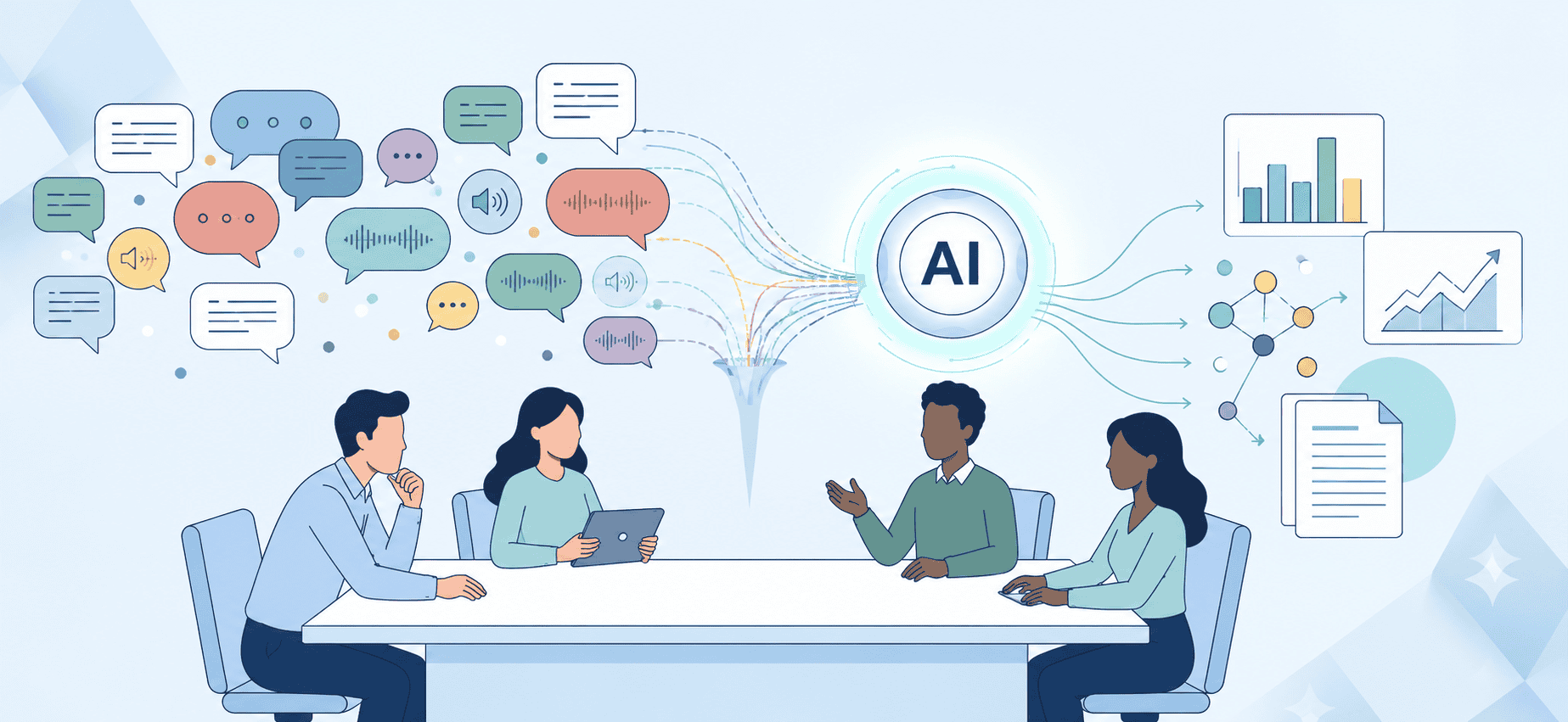
Customer interviews, support tickets, win/loss reports, NPS responses, product analytics, and market research often contain valuable insights hidden across thousands of data points. AI can help product managers identify patterns, surface anomalies, and synthesize information faster than traditional manual analysis.
Will identifies AI-assisted data interpretation as one of the most valuable emerging capabilities for product professionals. Product managers, he notes, are expected to make decisions from data, but most do not have the bandwidth to dig deeply into every dataset. Knowing how to use AI to surface patterns and insights from large volumes of qualitative or quantitative data can lead to faster, more evidence-based decisions without requiring a dedicated analyst for every question.
The skill is not asking AI for answers. It is knowing how to use AI to uncover insights worth investigating.
Why It Matters
- Product teams are often overwhelmed by customer, market, and usage data
- AI can help uncover patterns that would otherwise go unnoticed
- Faster analysis can lead to faster, better-informed decisions
- Evidence-based decision-making reduces reliance on opinions or the loudest voice in the room
Where You’ll Use It
- Customer interview analysis
- NPS and survey review
- Support ticket analysis
- Product usage analytics
- Win/loss research
- Market research synthesis
- Customer feedback prioritization
How to Develop This Skill
- Use AI to summarize, categorize and compare qualitative data
- Practice identifying patterns across multiple data sources
- Compare AI-generated insights with manual analysis
- Ask follow-up questions to test whether an insight is meaningful
- Focus on interpreting what the data means, not simply collecting more of it
- Validate important findings before using them to make strategic decisions
This free eBook shows you how you can use AI in market research, a foundational product management activity.
7. Evaluating AI-Generated Output Critically
AI can be incredibly helpful, but it can also be incredibly wrong.
Case in point, a federal judge in Mississippi imposed fines, removed the attorneys from both sides, and canceled a civil trial due to the misuse if AI. These attorneys used AI to create court documents, and the AI cited fake legal cases in court filings. The attorneys all claimed they didn’t know AI could hallucinate. But generative AI systems can hallucinate facts, misinterpret information, and present inaccurate conclusions with complete confidence. As organizations increasingly rely on AI-assisted decision-making, product managers must learn how to evaluate outputs critically.
Will warns that product managers cannot afford to treat AI outputs as facts. “A PM who blindly ships AI-generated insights is a liability,” he says, while “one who uses AI as a starting point with healthy skepticism is an asset.”
That distinction is essential. AI can accelerate research, analysis, and communication, but accountability still belongs to the product manager. Product managers need to understand the basics of how large language models work, recognize common failure modes, and build habits around validation.
This applies whether you’re reviewing market research, summarizing customer feedback, analyzing competitors, or preparing recommendations for leadership. AI can help product managers think faster, but it cannot replace product judgment.
Why It Matters
- AI can generate inaccurate, incomplete, or misleading information
- Product managers remain accountable for the decisions they make
- Critical evaluation helps prevent flawed recommendations and costly mistakes
- Strong judgment separates useful AI adoption from risky overreliance
Where You’ll Use It
- Market research
- Competitive intelligence
- Executive presentations
- Customer insight analysis
- Strategic recommendations
- Product planning
- AI-assisted reporting
How to Develop This Skill
- Verify claims using trusted sources
- Look for missing context and unsupported assumptions
- Treat AI outputs as inputs, not final answers
- Build habits around source validation and evidence review
- Ask what the AI might be missing, oversimplifying or inventing
- Develop a healthy skepticism without dismissing AI’s usefulness
The Future AI Product Manager
While AI technology continues to evolve rapidly, the responsibility of product management remains the same: solve meaningful customer problems. The difference is that today’s product managers must understand how AI changes the way those problems are solved.
Across these seven skills, a common theme emerges. Successful product managers are not becoming machine learning engineers. They are becoming translators between customer needs, business goals, and AI capabilities.
Amy’s perspective consistently returns to value creation. She challenges product professionals to focus on real customer outcomes, identify the highest-value workflows and determine where AI genuinely belongs.
Will’s perspective focuses on execution and judgment. From prompt engineering to evaluating AI-generated output critically, he emphasizes the importance of communication, validation and healthy skepticism.
Together, those perspectives point to the same conclusion: the most successful product managers won’t be defined by how many AI tools they use. They’ll be defined by how effectively they connect customer problems, business goals and AI capabilities.
The future belongs to product professionals who can do all three.