9 minute read
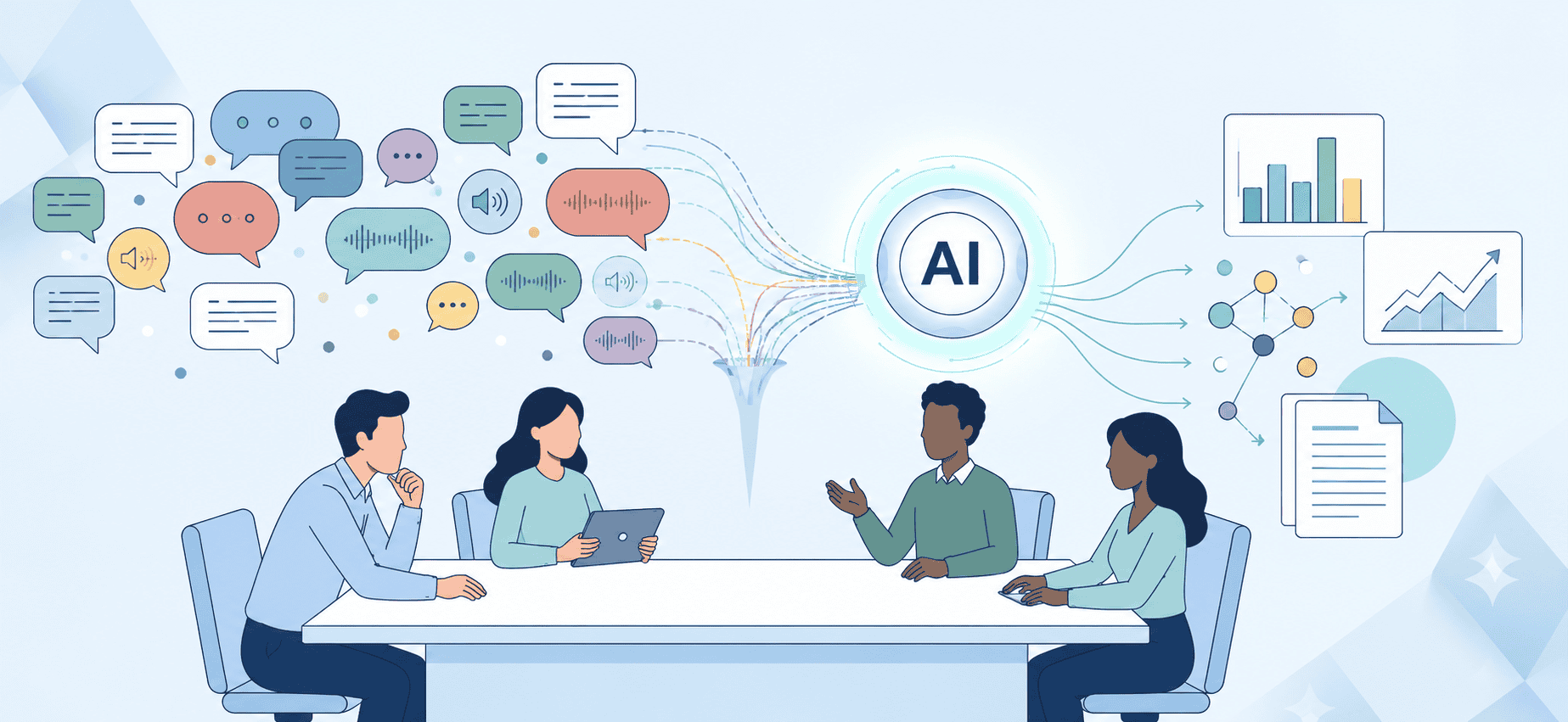
We have come a long way from the days of furiously writing or typing notes during every meeting and call during the workday. AI has made taking notes faster, easier, and more accurate than ever before. Today’s AI tools can record conversations, generate summaries, and capture action items in seconds, saving individuals countless hours of admin work.
But taking notes and summarizing meetings is only scratching the surface.
Every customer interview, sales call, project meeting, and executive discussion contains valuable information about your business, your customers, and your market. The real opportunity isn’t simply documenting those conversations, but discovering the patterns hidden within them.
In this article, we’ll explore how AI can help transform meeting notes into actionable business insights, allowing organizations to uncover emerging trends, validate decisions, and make better use of the knowledge they already have.
Why AI Meeting Notes Are More Valuable Than Simple Summaries
When evaluating AI meeting tools, many organizations focus on one question: Which platform produces the best summaries?
Summaries are useful, but they’re only the first step in extracting value from a conversation. The real opportunity comes from turning those conversations into insights.
- A summary explains what happened during a meeting.
- An insight explains why it matters and how it connects to broader trends across customers, products, or the business.
That’s an important distinction because most organizations don’t struggle to collect information. They struggle to connect and interpret it.
For example, imagine a customer success team that has spoken with fifty customers over the past quarter. Reviewing each meeting individually might reveal onboarding challenges, competitor mentions, or requests for additional reporting. When AI analyzes those conversations together, however, it can identify recurring patterns, such as onboarding issues concentrated among enterprise customers or a competitor appearing in an increasing number of sales conversations.
Those insights rarely emerge from reviewing meeting summaries one at a time. They become visible when conversations are analyzed collectively, helping organizations move beyond documentation and toward a deeper understanding of their customers, products, and markets.
What Makes AI-Generated Insights Useful?
One of the biggest misconceptions about AI is that every interesting observation qualifies as an insight. Useful insights require context, evidence, and interpretation.
Consider the difference between these four levels of analysis.
- An observation simply reports what someone said. For example, five customers mentioned onboarding challenges during recent meetings.
- A pattern begins connecting multiple observations by revealing that nearly half of enterprise customers discussed onboarding difficulties over the past three months, while very few small businesses raised the same concern.
- An insight explains why that pattern exists. AI may identify that enterprise implementations involve multiple administrators, making permission management significantly more complicated than it is for smaller organizations.
- A recommendation suggests where to investigate next. Rather than concluding that onboarding must be redesigned, AI can recommend validating whether simplifying user roles or improving administrator training would reduce implementation time.
The distinction matters because AI should strengthen evidence-based decision making rather than replace it. It can surface trends, organize information, and identify opportunities much faster than people working manually. Deciding what those findings mean for the business still requires human judgment.
Organizations that treat AI as a partner in analysis instead of an automated decision maker tend to produce stronger outcomes because they continue validating important findings through customer conversations, market research and cross-functional discussion before acting.
The Hidden Value of Conversation Data
Organizations invest enormous resources in collecting structured data. Dashboards measure performance, CRM systems track customer interactions, analytics platforms monitor user behavior, and financial reports measure business health. These sources provide valuable information because they’re organized, searchable, and relatively easy to analyze.
Conversation data has historically been much harder to use.
Every day, organizations generate thousands of conversations through:
- Customer interviews
- Sales and discovery calls
- Support interactions
- Project meetings
- Executive discussions
- User research sessions
- Vendor negotiations
These conversations contain rich qualitative information about customer motivations, frustrations, expectations, and emerging market conditions. Unfortunately, much of that knowledge disappears into notebooks, transcripts or individual memories because there has never been an efficient way to analyze it at scale.
AI Connects the Dots Across Conversations
Once conversations are organized consistently, AI can analyze hundreds of transcripts to identify recurring themes, compare discussions across departments, and detect subtle shifts in customer language over time.
For example, customers may stop asking for a specific feature and instead begin describing the business problem they’re trying to solve. While the language changes, the underlying need often remains the same. Those connections can be difficult to identify when reviewing customer interviews manually, but AI can recognize patterns across dozens or even hundreds of conversations.
The same is true across an organization. Different teams hear different parts of the customer story:
- Customer Success uncovers adoption challenges and recurring support issues.
- Sales hears objections, competitive threats and buying criteria.
- Product identifies unmet needs through discovery conversations.
- Marketing gathers market trends and customer messaging.
- Executives focus on strategic priorities and business risks.
Viewed independently, each team sees only part of the picture. When AI connects those conversations, organizations gain a more complete understanding of customer needs, market trends and emerging opportunities, turning meeting notes into a strategic source of business intelligence.
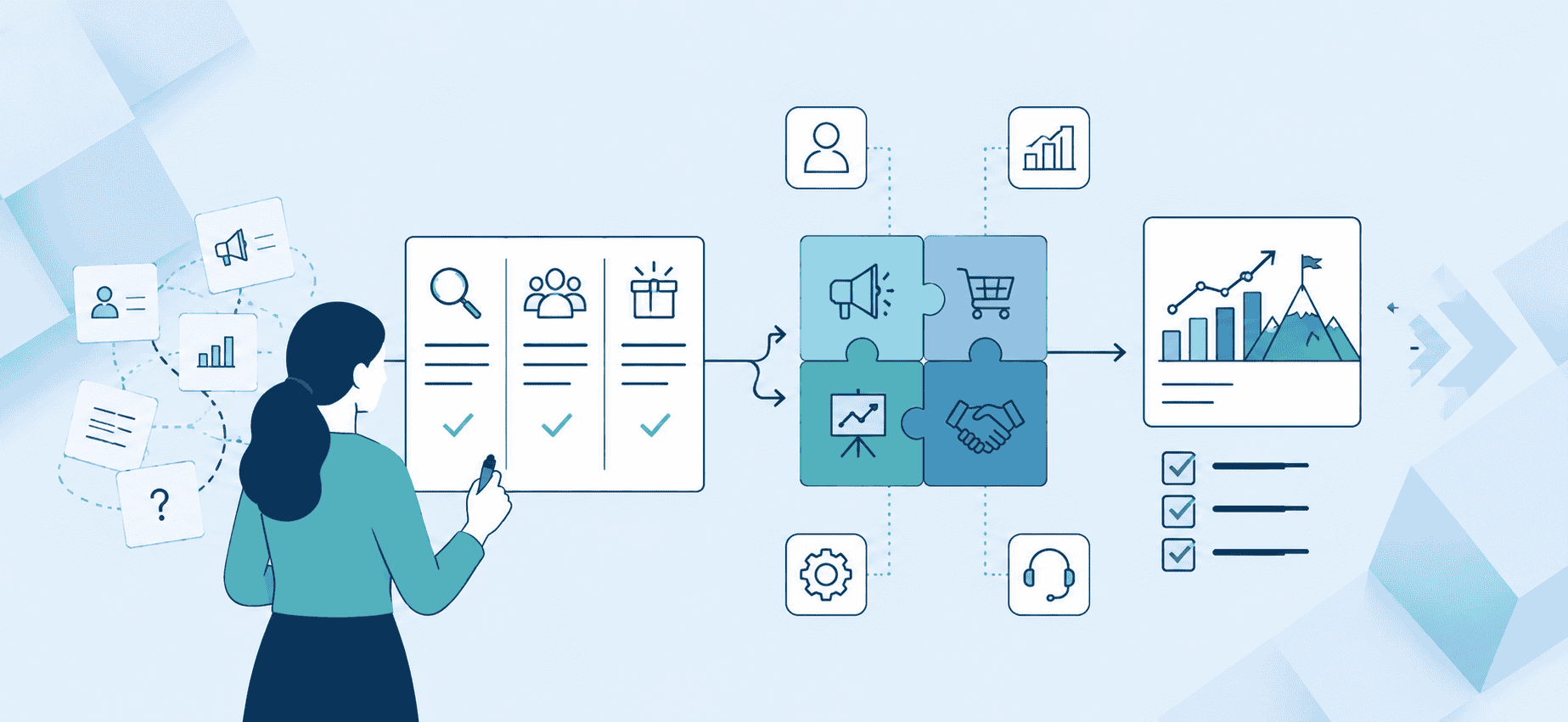
A Four-Step Workflow for Turning Meeting Notes Into Business Insights with AI
Turning conversations into actionable insights requires more than recording meetings and generating summaries. Organizations that gain the greatest value from AI typically follow a repeatable process that moves from capturing conversations to making informed decisions.
1. Capture conversations consistently
Every insight begins with reliable information.
Whether your organization uses ChatGPT, Claude, Microsoft Copilot, Gemini, Otter.ai, Fireflies.ai, Fathom, Granola or another AI meeting assistant, consistency is far more important than choosing the “perfect” platform. AI can only identify meaningful patterns when the information it’s analyzing is organized consistently.
Develop clear guidelines around which meetings should be recorded, how transcripts should be stored, and what contextual information should accompany each conversation.
Recording details such as the customer segment, industry, meeting type, participants, product line or stage of the customer journey alongside each transcript makes future analysis significantly more meaningful.
For example, instead of saving a transcript as: Customer Meeting – June 10, capture the meeting using a consistent structure such as:
- Customer: ABC Health
- Customer Segment: Enterprise organizations with administrative burden
- Industry: Healthcare
- Meeting Type: Discovery Call
- Product: Product X
- Customer Stage: Existing Customer
- Participants: Product Manager, Sales Director, CIO
When AI analyzes dozens or even hundreds of conversations, that additional context allows it to identify patterns by industry, customer size, segment, product, customer journey stage or meeting type instead of treating every transcript as identical.
Consistency also improves the quality of AI’s analysis over time. Standardized meeting records make it easier to compare conversations across customers, departments and time periods, allowing AI to surface trends that would be difficult to identify through manual review.
2. Organize information for future analysis
Another significant mistake organizations make is treating meeting notes as isolated documents. Instead, think of every conversation as another piece of evidence contributing to a much larger body of organizational knowledge.
Organizing meetings by categories such as customer type, industry, product line, research initiative or sales stage makes it much easier to identify meaningful patterns later. A searchable repository also allows teams to revisit conversations months after they occur, compare similar discussions, and analyze trends that would otherwise remain hidden.
This doesn’t require an elaborate knowledge management system. Even simple, consistent organization dramatically improves AI’s ability to recognize relationships between conversations.
3. Analyze conversations for patterns
Once your meeting notes are organized consistently, AI can begin analyzing them collectively rather than one conversation at a time. This is where it moves beyond summarization and starts uncovering meaningful insights that would be difficult to identify through manual review.
Instead of asking AI to summarize a single meeting, ask it to analyze every customer interview conducted during the past quarter. Compare executive planning meetings against customer interviews or examine support conversations alongside product discovery sessions. Looking across multiple conversations gives AI the context it needs to identify trends rather than simply report what was discussed.
Rather than focusing on isolated comments, ask AI questions such as:
- Which customer problems are mentioned most often?
- Which competitors are appearing more frequently?
- What objections consistently delay purchasing decisions?
- Which feature requests occur across multiple customer segments?
- How do customer priorities differ by industry or company size?
- What themes have become more or less common over the past six months?
The goal isn’t simply to collect more observations but rather to identify patterns that appear consistently enough to warrant further investigation. Those recurring themes often become the strongest evidence for customer research, product planning, process improvements, or strategic discussions.
4. Turn insights into action
Identifying patterns is only valuable if those findings influence what happens next. The goal isn’t to create another report. It’s to help teams ask better questions, prioritize the right work, and make better decisions based on stronger evidence.
What this might look like
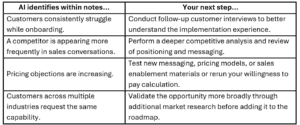
Rather than treating AI’s findings as final answers, use them as starting points for investigation. AI organizes evidence and surfaces patterns, but people still determine what those patterns mean and how the organization should respond.
Organizations that consistently validate AI-generated findings through customer conversations, market research, and cross-functional collaboration are far more likely to distinguish genuine market signals from isolated anecdotes. That combination of AI-assisted analysis and human judgment creates a stronger foundation for strategic decision making.
What Types of Meetings Produce the Most Valuable Insights?
Not every meeting deserves the same level of analysis. While AI can summarize almost any conversation, some meeting types consistently generate richer insights because they reveal how customers, employees, and stakeholders think, rather than simply documenting project updates.
Some of the most valuable conversations include:
- Customer interviews reveal unmet needs, goals, and the language customers naturally use to describe their challenges. Analyzing multiple interviews helps distinguish recurring pain points from isolated feedback.
- Sales discovery calls uncover buying criteria, competitive threats and objections, helping teams refine messaging and identify shifts in customer priorities.
- Support interactions expose recurring usability issues, implementation challenges, and opportunities to improve customer experience.
- Internal meetings, such as sprint retrospectives, executive planning sessions and cross-functional discussions, reveal operational bottlenecks, strategic priorities, and alignment gaps across teams.
Viewed together, these conversations provide a much richer understanding of the business than any single meeting could. AI helps connect those perspectives, turning individual discussions into evidence that supports better decisions.
How Product Teams Can Use AI to Become More Market-Driven
For product professionals, every customer conversation is another piece of market evidence. AI helps teams organize and connect those conversations, making it easier to identify recurring problems, validate assumptions, and prioritize opportunities based on evidence rather than intuition.
Some of the richest sources of insight include:
- Customer interviews reveal unmet needs, pain points, and desired outcomes.
- Discovery conversations highlight workflows customers struggle to complete.
- Sales calls uncover buying criteria, competitive threats and common objections.
- Support interactions expose recurring usability issues and implementation challenges.
- Win-loss interviews explain why customers choose one solution over another.
- Executive discussions provide context around business priorities and strategic direction.
Instead of manually reviewing hundreds of transcripts, product teams can use AI to surface recurring themes that inform customer research, product strategy, and roadmap discussions, allowing them to spend more time validating insights with customers.
AI can accelerate analysis, but strong product decisions still depend on customer discovery and market validation.
Protect Sensitive Information When Using AI
As organizations incorporate AI into meeting workflows, they should also establish clear guidelines for handling sensitive information.
Meeting transcripts often contain confidential information, such as:
- Customer discussions
- Financial information
- Intellectual property
- Personally identifiable information
Teams should understand what information can be shared with AI systems, which tools have been approved for internal use and when transcripts should be anonymized before analysis. For organizations operating in regulated industries, additional governance may be necessary.
Check with leadership and understand your policies before uploading information into any AI platform.
Common Mistakes When Using AI for Meeting Notes
Organizations often focus on what AI can do while overlooking how they should use it. Avoiding a few common mistakes can significantly improve the quality of the insights AI generates.
- Treating summaries as definitive. AI-generated summaries are useful starting points, but they should always be reviewed for accuracy, especially when important business decisions depend on them.
- Analyzing meetings individually instead of collectively. The greatest value comes from comparing conversations, identifying recurring themes, and recognizing trends over time.
- Asking AI to make decisions instead of gathering evidence. Rather than asking whether a feature should be built, ask AI what patterns appear consistently across customer conversations and what additional research might validate those findings.
- Asking generic questions. Instead of requesting another meeting summary, ask AI to identify patterns, compare conversations, challenge assumptions, or highlight areas where more evidence is needed.
- Relying on a single source of feedback. The strongest insights often emerge when AI analyzes conversations across customer success, sales, marketing, support, and product teams together.
- Assuming AI replaces customer engagement. The opposite is true. AI helps identify where deeper conversations should happen, allowing teams to spend more time validating insights with customers instead of searching through transcripts.
The AI Meeting Insight Prompt Library
The quality of AI’s output depends heavily on the questions you ask. Rather than requesting another meeting summary, use prompts that encourage deeper analysis across multiple conversations. The following are starting points for prompts that are helpful in analyzing AI meeting notes, but you should edit them to suit your own specific purposes.
Identify recurring customer problems
“Review these customer interviews and identify the five most frequently discussed problems. Group similar issues together, explain why customers are experiencing them and include representative quotes that support each finding.”
Separate facts from assumptions
“Analyze these meeting notes and separate statements supported by evidence from opinions, assumptions or speculation. Explain where additional validation may be needed.”
Identify feature requests by frequency and urgency
“Review these customer conversations and identify the requested capabilities. Rank them based on how frequently they appear and how urgent customers describe the problem they are trying to solve.”
Compare conversations over time
“Compare customer interviews from the previous quarter with those from the current quarter. Identify changes in customer priorities, new challenges, and topics that have become more or less common.”
Identify operational bottlenecks
“Review these internal project meetings and identify recurring delays, communication breakdowns or process issues. Group similar challenges together and summarize their potential business impact.”
Summarize executive priorities
“Analyze these executive planning meetings and identify recurring strategic priorities, risks and business objectives. Highlight where priorities changed over time and list how those priorities have changed.”
Compare customer and internal perspectives
“Compare customer interviews with internal planning meetings. Identify where customer priorities align with internal assumptions and where significant gaps exist.”
These prompts encourage AI to synthesize information across multiple conversations rather than simply documenting a single meeting. That shift in perspective often produces far more valuable outputs.
You may also want to explore AI Agents to help you in this process. An AI agent is a system that can take a goal, like analyzing information and uncovering insights, and work with some degree of independence.
Learn more about using AI agents:
- AI Agents for Product Managers: What they are and how to use them
- Product Professionals Guide to AI Agents (eBook)
- AI Agents for Product Professionals Course
Final Thoughts
Every organization has conversations that shape future decisions. Customers explain their challenges, prospects reveal why they buy or hesitate, employees identify operational obstacles and executives discuss strategic priorities. Individually, these conversations move work forward. Together, they reveal how your customers, business, and market are evolving.
For years, that knowledge remained buried in meeting notes, transcripts, and individual memories. AI doesn’t create new information. It helps organizations organize conversations, connect patterns, and surface insights that might otherwise remain hidden.
The real value of AI meeting notes isn’t producing better summaries. It’s transforming conversations into evidence that supports better decisions. Organizations that embrace that mindset won’t simply become more efficient. They’ll better understand their customers, respond to change more quickly, and make decisions with greater confidence.