
Design Value Propositions Like User Stories: The 3WH Method

3WH145

Value propositions are big-picture positioning statements that explain the benefit your product provides customers. They can also help your marketing team understand what resonates with your target audience. But how do you document and share these value propositions? My suggestion: Take a page from the agile playbook and apply user stories.

User stories are used in agile, lean startup and scrum for software development and normally follow this template:

As a <role>, I want <goal/desire> so that <benefit>.

Product development teams complete this template to clarify the end user, the desired objective and the benefit to build. The role is the who, the goal is the what and the benefit is the why. By understanding the customer’s fundamental motivations, developers can ensure they are serving customer needs and delivering satisfaction.

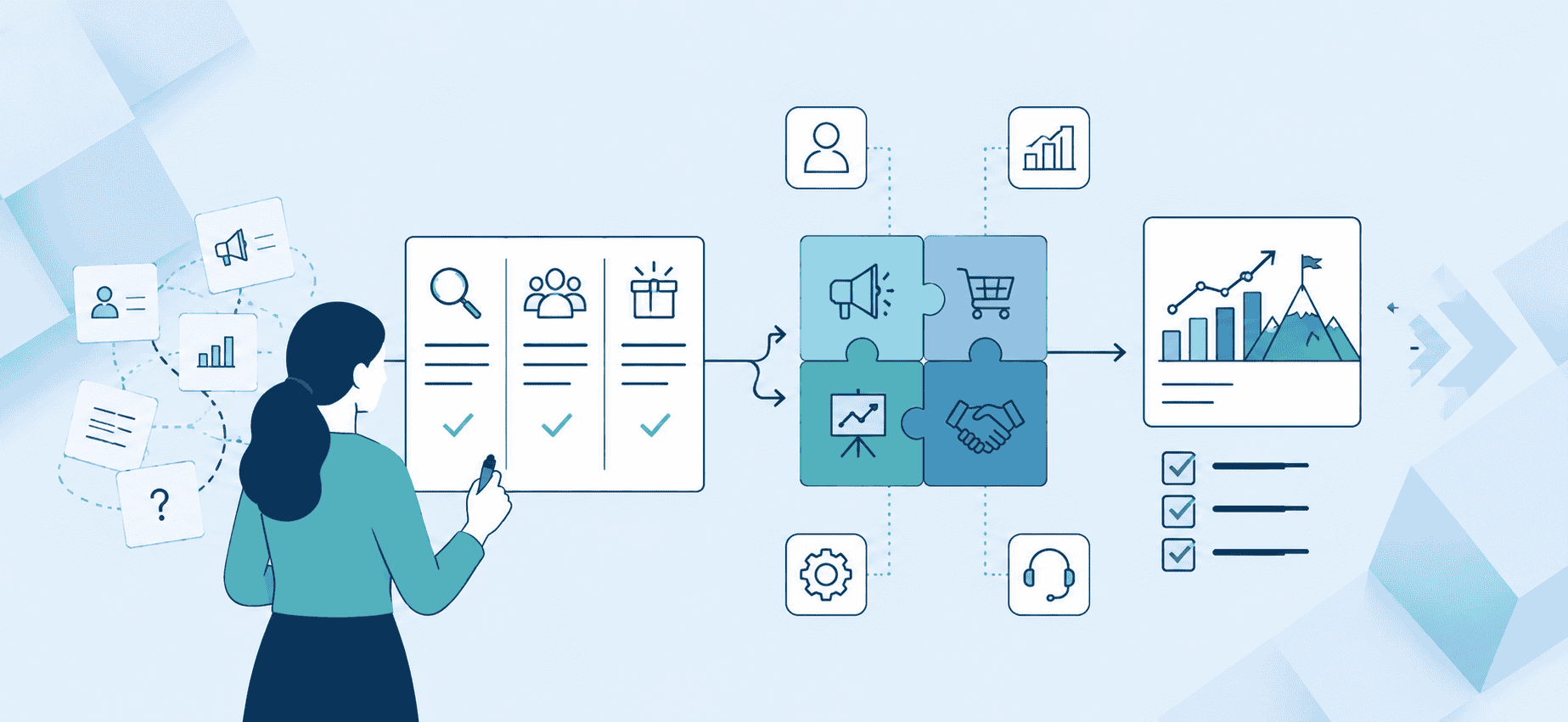
This same format can also be used to write value propositions that provide clear messaging around customer needs to sales and marketing. For that, I use the 3WH methodology, which incorporates <who>, <why>, <what> and <how>. Done early in the process, it can help guide the entire project.

Author

  • Ben Snipes

    Benjamin Snipes, a professional with 21 years of experience in business and legal domains, has contributed significantly to companies like Bloomberg and Orange Business Services. His expertise spans securities, risk management, and blockchain, showcasing leadership excellence. For questions or inquiries, please contact [email protected].

    View all posts

Most Recent

Article

Product Ops and the Pragmatic Framework 

Product organizations often struggle to apply the Pragmatic Framework consistently as teams and complexity grow. This article explains how product ops enables scalable execution by reinforcing standards, alignment, and shared ways of working.
Article

Product Positioning Strategies for Competitive Markets

Product positioning strategies often break down in competitive markets as complexity grows. This article explains how three practical pillars help teams regain clarity by focusing positioning on the decisions that matter most.
Article

Product Management Best Practices 

We talked to the experts to find out what product management best practices should be prioritized in the new year. So if you want to start 2026 with clarity, confidence, and a smarter product management...
Article

Instacart’s AI Pricing Controversy: Why Perceived Fairness Is Vital  

The Instacart pricing controversy has sparked a broader conversation about AI pricing and customer trust. This article explores why transparency and perceived fairness, not just algorithmic accuracy, must drive pricing strategy. 
Category: Product Pricing
Article

Should You Flatten Your Product Roles? 

LinkedIn replaced its associate product manager program with an associate builder track. Paul Young and Clarke Smithe, our product instructors and industry leaders, talk about the what the repercussions of flattening product roles could be and...

OTHER ArticleS

Article

Product Ops and the Pragmatic Framework 

Product organizations often struggle to apply the Pragmatic Framework consistently as teams and complexity grow. This article explains how product ops enables scalable execution by reinforcing standards, alignment, and shared ways of working.
Article

Product Positioning Strategies for Competitive Markets

Product positioning strategies often break down in competitive markets as complexity grows. This article explains how three practical pillars help teams regain clarity by focusing positioning on the decisions that matter most.

Sign up to stay up to date on the latest industry best practices.

Sign up to received invites to upcoming webinars, updates on our recent podcast episodes and the latest on industry best practices.